
The Smart Upgrade: Revitalising Steel & Aluminium Measurement with LGE Engineering’s Ready-to-Use Retrofit Kits
- Details
- Category: What's new
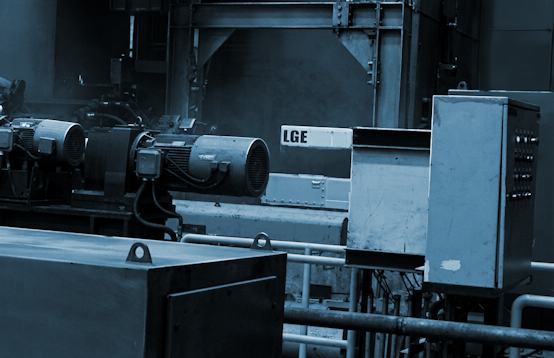
In the heavy industries of steel and aluminium production, the measurement infrastructure is often the "eyes" of the mill. For decades, manufacturers have relied on non-contact gauges to ensure that beams, pipes, and flat products meet stringent dimensional tolerances. However, many of these critical systems—some manufactured during the 1960s and 70s by legacy brands like Measuray, Sheffield, or Bendix—are now obsolete . Faced with the choice between a costly, disruptive full-line replacement or risking line downtime due to failing electronics, plant managers have often felt trapped.LGE Engineering offers a third path: revamping old measurement systems using ready-to-use upgrade kits. This approach is redefining how metal producers handle obsolescence, marrying half a century of industrial heritage with the precision of Industry 4.0.
Â
Seeing Beyond the Surface:Â Forging the Future of Metal Processing with AI
- Details
- Category: What's new
Where margins are thin and defects are costly, the difference between profit and loss often comes down to microns. For decades, measurement and control systems have relied on traditional sensors and manual oversight. However, as the industry lately pushes for zero-defect production and completely autonomous plants, we've been pioneering this matter. While many companies use artificial intelligence for data analysis, LGE is pioneering the integration of AI directly into the measurement and control loop for metals. By moving beyond simple data collection, LGE is enabling mills to "see," understand, and react to their processes in real-time with unprecedented precision.
- Every Metal, Every Line, Scalable by Design, Affordable by Mission: our measurement and control systems
- Why Obsolete Measurement Systems are Crippling Modern Steel Plants
- How AI is Revolutionizing Industrial Measurement Systems
- Why Main Manufacturers are Moving from X-ray to Confocal and Radar Technologies